

Orthopedic & regenerative care
Where it hurts,
and how we treat it.
Surgical, non-surgical and regenerative treatment across four areas of musculoskeletal care.
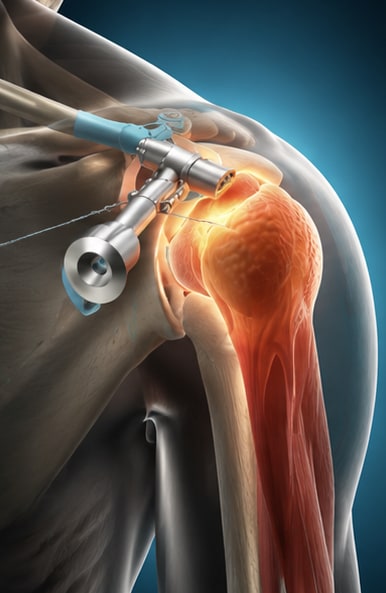
Shoulder, Elbow,
Wrist & Hand
Arthroscopy and arthroplasty
The upper limb is a chain of small, highly mobile joints, and a problem in one of them shows up in everything you do — reaching a shelf, gripping a wheel, sleeping on your side.
Arthroscopy is keyhole surgery: a narrow camera is passed into the joint through a small incision so the surgeon can see the structures directly and treat what is found through instruments of a similar size. Arthroplasty is joint replacement — a worn joint surface is replaced with an implant.
- Shoulder arthroscopy and arthroplasty
- Elbow arthroscopy and arthroplasty
- Wrist and hand arthroscopy and arthroplasty

Hip & Knee
Arthroscopy and arthroplasty
The hip and knee carry your whole body weight with every step. When cartilage wears through, the pain is mechanical — it comes with load and with use. As it advances it starts intruding on rest and on sleep. How far it has gone shapes what treatment makes sense.
Our surgeons work across the range, from keyhole arthroscopy through to joint replacement.
- Hip arthroscopy and arthroplasty
- Knee arthroscopy and arthroplasty
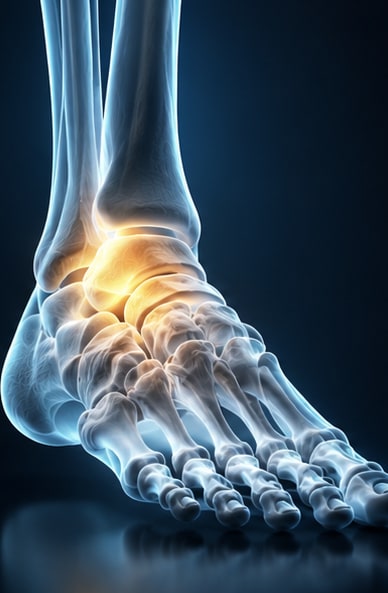
Foot & Ankle
Arthroscopy and arthroplasty
Twenty-six bones and thirty-three joints absorb the load of every stride you take. Foot and ankle problems are easy to work around for a while — and that is exactly what turns a small injury into a long one.
Assessment starts with how you actually move, and treatment is matched to what is found.
- Foot and ankle arthroscopy
- Foot and ankle arthroplasty

Regenerative &
Minimally Invasive
PRP, Wharton’s Jelly, exosomes and BMAC
TIME Orthopedics offers regenerative and minimally invasive therapy using PRP, Wharton’s Jelly, exosomes and BMAC (bone marrow).
- Platelet-rich plasma (PRP)
- Bone marrow aspirate concentrate (BMAC)
- Wharton’s Jelly preparations
- Exosome preparations
Wharton’s Jelly and exosome preparations are not approved by the FDA for the treatment of orthopedic conditions. Whether any of these treatments is appropriate depends on your diagnosis, your history and your goals, and that is a conversation to have with a provider. Call us and we will talk you through what is involved, what the evidence does and does not show, and what the alternatives are.
Not sure which one
you need?
Get in touch and tell us where it hurts — we will point you to the right provider.